You ran three campaigns last week. LinkedIn ads, a Galxe quest, and a KOL link drop. Wallets came in. TVL moved. Then your founder asked which channel drove it. You opened GA4. You opened Dune. You stared at both.
You couldn't answer.
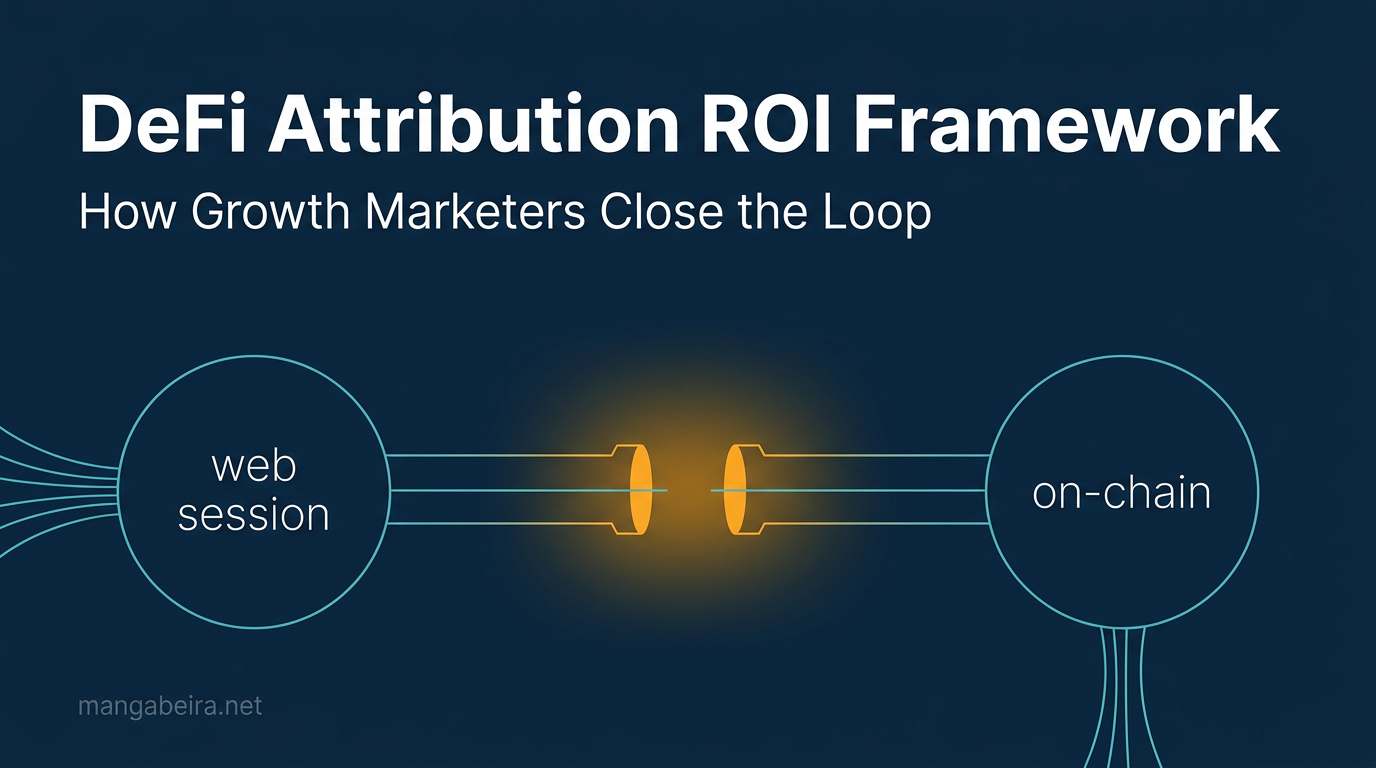
That's not a tools problem. You have GA4, UTMs, and Dune. The problem is structural: DeFi attribution breaks because your campaign data lives in a web session and your protocol outcomes live on-chain, and nothing connects them by default.
This guide is for the growth marketer sitting inside the protocol. Not the founder, not the engineer. You didn't build the product. You can't touch the codebase alone. But you're the one who has to prove campaign ROI every Monday. I'll cover three attribution methods ranked by what you can actually ship, one way to get the engineering time to fix it properly, and four reports that turn chain data into a conversation your leadership can act on. This article is part of the Web3 Growth Marketer's Resource Cluster.
TL;DR
- • Your UTM disappears when the wallet connects. Web session and on-chain transaction exist in separate data planes with no default bridge.
- • Three methods by who builds it: UTM bridge (growth team only, today), SIWE (growth + 1 sprint), cohort forensics (data analyst + engineering)
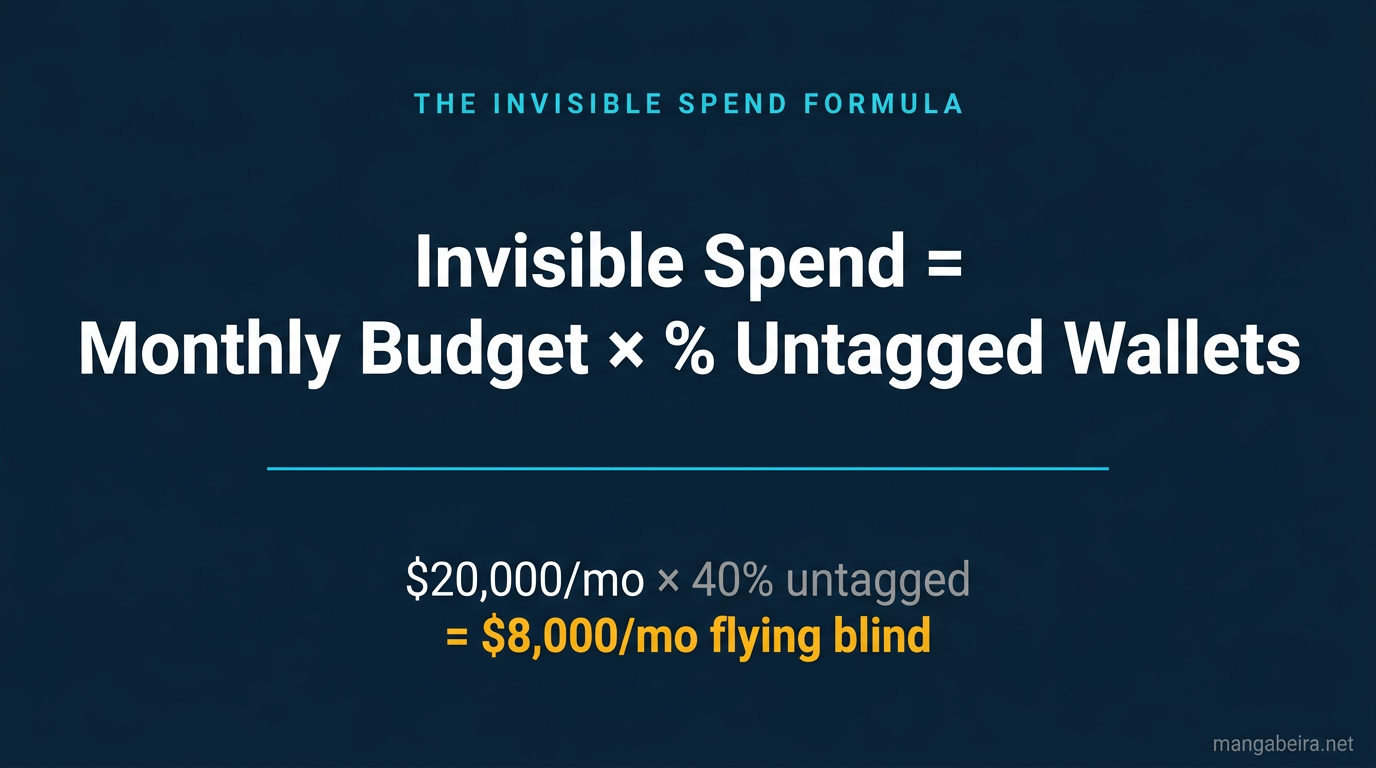
- • Get engineering time by calculating invisible spend: (monthly budget x % untagged wallets) = dollar amount flying blind
- • Four Monday reports: source waterfall, retention by channel, cost per activated wallet, week-over-week delta
Why Your Campaign Data Stops at the Wallet Screen
If you've tried applying standard marketing attribution to DeFi campaigns, you've already felt this. You hit a wall at the exact point where the marketing interaction becomes a protocol interaction. Three structural problems cause it.
Your UTM Disappears When the Wallet Connects
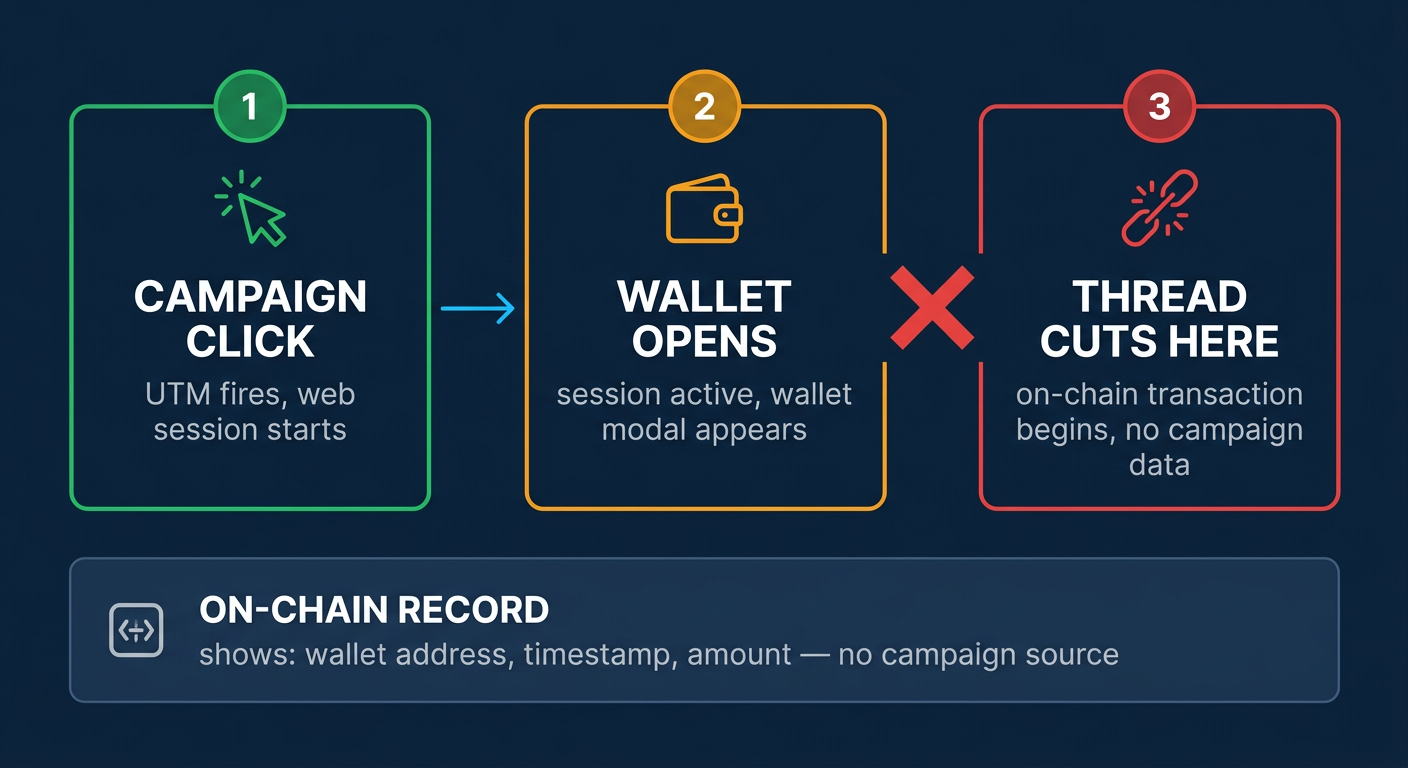
Your UTM fires. The landing page loads. The wallet connects. From that point, you're blind.
The web session tracks everything up to that moment: the click source, the landing page, the time on site. Then the wallet opens and the transaction begins, and the thread is cut. Blockchain transactions have no referral field. The EVM doesn't carry campaign metadata. Whatever brought the user to your protocol doesn't travel into the on-chain record.
Your GA4 shows 300 wallet connect events from the campaign. Dune shows 140 new deposits in the same window. You can't close the loop between them.
A Wallet Address Is Not a User
One person can control 12 wallets. A Sybil farmer running a points program can run 400. When you count wallet addresses as users, your cohort data is corrupted before you write the first report. Retention numbers (the ones your leadership cares about most) are measuring wallets, not people.
Bridging Resets the Trail
A user who bridges from Ethereum to Arbitrum before interacting with your protocol shows up in your Arbitrum data with no origin story. The bridge transaction doesn't carry your campaign attribution. You can see the wallet appeared. You can't tell if it came from your KOL drop or a competitor's airdrop that launched the same morning.
Key Insight
The campaign touchpoint lives in your web analytics. The economic action lives on-chain. Nothing links them by default. That gap is an instrumentation problem, not a tools problem. You can't fix it by switching analytics platforms. You fix it by bridging the two data planes deliberately.
Three Methods, Ranked by What You Can Ship Without a Dev
The right method depends on what your team can actually ship, not the theoretically best accuracy. The column that matters most is who has to build it.
| Method | How It Works | Est. Accuracy* | Who Builds This |
|---|---|---|---|
| UTM Bridge | Tag off-chain campaign links with UTM params. On wallet connect, the platform matches the browser session to the wallet address and records it. | ~60-70% | Growth team only, no engineering ask |
| Sign-In with Ethereum (SIWE) | User authenticates with their wallet before transacting. Creates a durable link: wallet address to session to campaign source. | ~85-95% | Growth + engineering (1 sprint) |
| Cohort Forensics | Group wallets by acquisition timing, behavioral patterns, and chain of custody. Identifies which campaign window they came from retroactively. | ~70-80% | Data analyst + engineering (1-3 sprints) |
*Accuracy figures are estimates based on implementation patterns across Web3 analytics practitioners. Actual rates vary by protocol architecture and traffic mix.
How to Choose
Start with UTM bridge if your campaigns run primarily off-chain: LinkedIn ads, Reddit posts, KOL link drops, newsletter drops. No engineering ask, and it works today. You'll get coverage of roughly 60-70% of your paid traffic. That's enough to cut the worst-performing channel.
Move to SIWE when you need individual-level retention data. If you're running points programs, airdrops, or any campaign where distinguishing genuine users from Sybil wallets matters, SIWE is the threshold you need to cross.
Use cohort forensics when significant organic traffic arrives with no prior web touchpoint. If more than half of new wallets appear without any click trail, behavioral pattern matching can identify which campaign window they arrived from.
Common Mistake
Cohort forensics looks like a workaround for skipping SIWE. It isn't. Pattern matching produces population-level estimates, not individual attribution. Use it to understand channel mix. Don't use it to calculate per-channel CAC or credit individual users to campaigns.
How to Make the Case for Engineering Time (Without Sounding Like a Data Engineer)
UTM bridge gets you started. SIWE is where attribution actually works. SIWE needs engineering. And the engineering conversation is harder than it looks. Your team is managing security fixes, gas optimizations, and a roadmap that was set before you joined.
The Number That Moves Founders
Don't lead with "we need attribution infrastructure." Lead with the invisible spend number.
Here's the formula: take your total monthly campaign spend, estimate what percentage of new wallets arrive with no attribution source, multiply. That's the dollar amount flying blind every month, going to channels you can't evaluate, cut, or justify.
If you're spending $20,000 per month and 40% of new wallets are untagged, that's $8,000 per month with no kill signal. Not $8,000 wasted, but $8,000 you can't optimize. Which means you can't stop wasting it even when it is. One sprint that fixes attribution pays back within weeks of catching one underperforming channel.
The One-Sprint Ask
SIWE breaks into two tasks engineering can ship in 5 working days:
A login-before-using flow using EIP-4361 standard libraries. Configuration, not novel engineering. The cryptography is handled by existing libraries. Your frontend team has likely seen this pattern before.
One database table linking wallet address to session ID and campaign source. Every attribution query from this point forward reads from this table permanently. One table, built once.
What to Say in the Room
In the conversation with your founder or CMO, don't say "SIWE," "UTM bridge," or "attribution stack." Say: "login step," "campaign tracking," "which channel drove this wallet."
One sentence: "We're spending $X per month on campaigns with no data on which ones produce wallets. One engineering sprint fixes the capture layer permanently." Frame it as revenue protection. Engineers prioritize uptime, security, and revenue. "Better dashboards for marketing" doesn't make the sprint list. "We can't cut underperforming channels because we can't see which ones they are" does.
The 4 Reports to Show Leadership on Monday
Once attribution is wired, these four reports are what you bring to the weekly sync. Each one answers a question your leadership is already asking when they walk into the room. See metric definitions for the full KPI framework behind each panel.
Attribution Waterfall
Their question: Where are our users coming from?
Channel breakdown: total wallets per source (paid, organic, referral, aggregator). Top 3 sources by wallet volume. Week-over-week change per channel. Unattributed wallets shown separately, not dropped, not hidden. Sybil wallets excluded before the count runs.
Cohort Retention by Source
Their question: Are the users we're paying for staying?
7-day and 30-day retention rates broken out by acquisition channel. This is where channel quality shows. A Discord campaign producing 50% 30-day retention beats a Twitter ad at 5%, even if the ad brought twice the wallet count.
Cost Per Activated Wallet
Their question: What does each user actually cost?
Total spend per channel (ads + quest incentives + referral payouts + airdrop allocations) divided by wallets reaching your activation threshold. Include all incentive spend. Leave out quest rewards and your CAC is understated, your channel comparison is wrong, and your unit economics case is built on bad math.
Week-over-Week Delta
Their question: Are we getting better?
One number: total activated wallets this week vs last week. Then a 4-week trend line. Simple, hard to spin, and forces focus on consistent growth rather than one-week spikes from incentive campaigns that don't hold past the reward window.
Best Practice
All four panels go in a single Dune dashboard or Notion page. One URL, updated before the Monday sync. If they have to ask you for the link, the system isn't working.
Run This Audit Before Your Next Campaign Brief
Before you plan the next campaign, run these five checks. A bad attribution setup makes every data point misleading. You won't know until you're already three months in.
Attribution Readiness: Pre-Campaign Checklist
Frequently Asked Questions
Can growth marketers build DeFi attribution without engineering support?
Yes, for UTM bridge attribution. You can configure UTM parameters across off-chain campaigns and record first-transaction wallet matches with no engineering support. For higher accuracy, Sign-In with Ethereum requires one engineering sprint. Cohort forensics requires a data analyst and engineering capacity. Start with UTM bridge, prove the value with 30 days of data, then pitch the sprint.
What is the most accurate DeFi attribution method?
Sign-In with Ethereum (SIWE) is the most accurate for users who authenticate before transacting, reaching an estimated 85-95% accuracy. It requires a wallet login modal on the frontend and a wallet-identity table on the backend. UTM bridge attribution reaches an estimated 60-70% for off-chain campaign traffic. Neither method captures fully anonymous on-chain users who never interact with your web interface before transacting. Accuracy figures are estimates. Actual rates vary by protocol architecture.
How do I prove DeFi campaign ROI to leadership?
Run four weekly reports: attribution waterfall by channel, cohort retention at 7 and 30 days by source, cost per activated wallet by channel, and a week-over-week delta trend. Together they answer the questions leadership actually walks into the Monday sync asking: where are our best users coming from, are they staying, what does each one cost, and are we improving? Present all four in a single dashboard, not separate reports.
What is UTM bridge attribution in DeFi?
UTM bridge attribution uses standard UTM parameters on off-chain campaign links, then matches those sessions to wallet addresses on first transaction. When a user clicks a tracked link and connects their wallet, your platform links the wallet address to that session record. It works well for direct traffic campaigns. It misses users who arrive organically, through aggregators, or by bridging from another chain without a prior web touchpoint.
How do I get engineering buy-in to fix Web3 attribution?
Frame it as a data capture problem (one frontend change and one database table), not a new reporting layer. Calculate your invisible spend: monthly campaign budget multiplied by the percentage of new wallets with no attribution source. Lead with that number, not with analytics needs. One sprint. Permanent fix. One sentence: "We're spending $X per month with no data on which campaigns drive wallets. One engineering sprint fixes the capture layer permanently."
What I'm Watching Next
The attribution problem is about to get more complex. As on-chain AI agents take on more campaign execution, the sequence of touchpoints gets harder to trace. The growth marketers with SIWE in place before that shift happens will come out of it with clean data. Everyone else starts over.
This week: UTM bridge running by Friday. SIWE on next sprint planning. Four Monday reports set up within 30 days. That sequence is enough to identify your worst-performing channel and redirect the spend before next quarter.
Want help building your attribution framework?
The Web3 Growth Audit includes an attribution infrastructure review: which method fits your team, what to build in the first sprint, and how to structure the leadership reporting layer.
Build Your Attribution Map →Related Articles
The Metrics That Actually Matter for DeFi Marketing Teams
Which KPIs growth marketers own vs. reference. How to build the weekly update leadership actually reads.
Read the ArticleWeb3 Growth Marketer's Resource Hub
The full cluster: community-led growth, DeFi attribution, KPI frameworks, and campaign mechanics. Start here.
Explore the ClusterSources and Citations
• EIP-4361: Sign-In with Ethereum. eips.ethereum.org
• Formo. "How to Improve User Retention in Web3." formo.so
• Nansen. "What is DeFi Analytics: Tools, Metrics, TVL Guide." nansen.ai
• Dune Analytics. Custom on-chain queries and wallet cohort analysis. dune.com
• Andy Jagoe. "11 Metrics for DeFi Marketplaces." andyjagoe.com