
What community-led growth means for a DeFi protocol
Community activity supports a growth claim only when I can connect it to a defined product action and then to repeat use or another stated outcome. Members, views, messages, and reactions are useful context. They do not prove product adoption by themselves.
A DeFi team can make this measurable without pretending that every member becomes a user. Start with one community action, such as joining a group or following a product update. Then define the next product event that matters, such as a completed onboarding step, a connected wallet, or a successful transaction. Finally, observe whether the same cohort returns within a stated window. If you cannot connect those steps, report them separately.
For a related perspective on advocates and referral behavior, see my guide to DeFi community evangelists. For the wider measurement set, I also use the DeFi growth KPI framework.
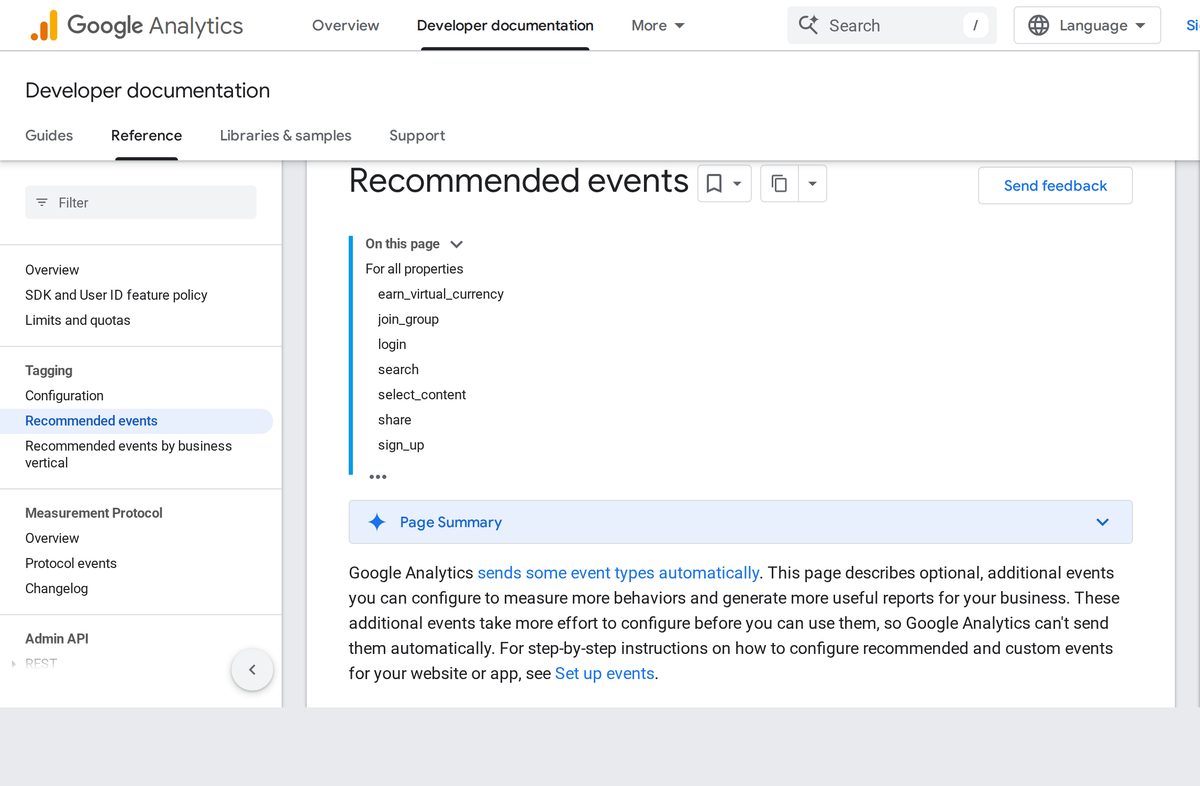
I use “community-led” to describe a path worth testing, not a causal result already established. A community can answer questions, share product changes, and help users learn. The data still needs to show whether participation preceded a product action and whether that user returned. Google’s event documentation makes the same practical point from a measurement angle: recommended events need context and must be configured before they can populate useful reports.
Map community activity to product actions
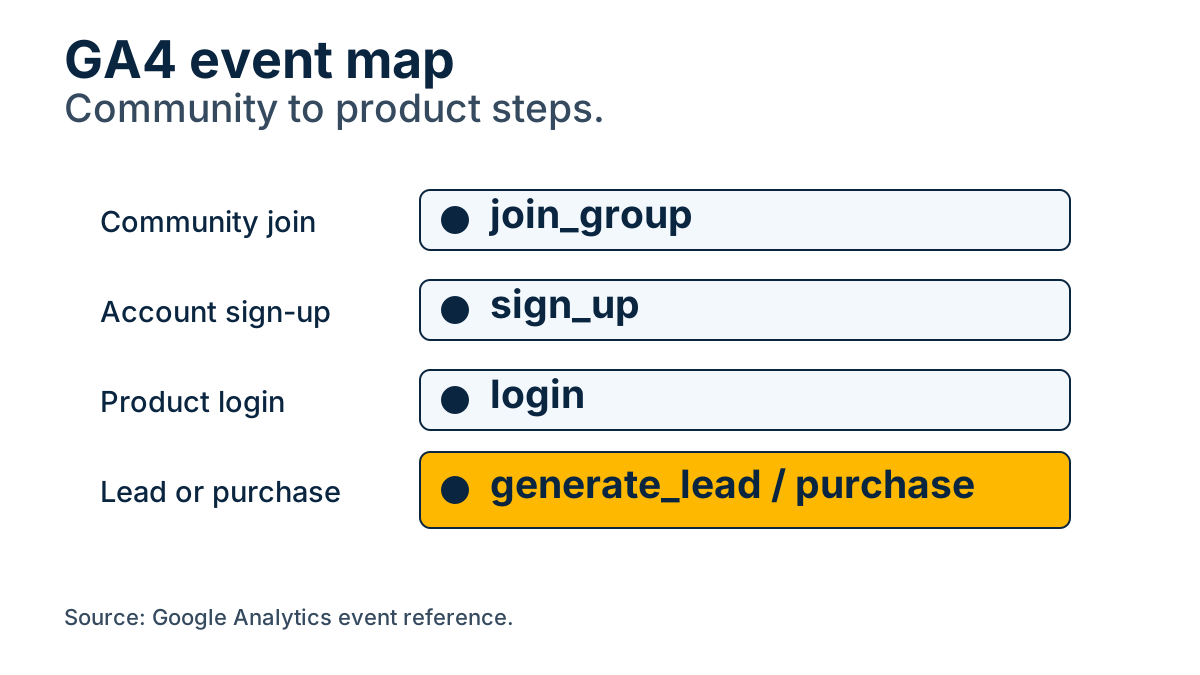
Google Analytics lists recommended event names such as join_group, sign_up, login, generate_lead, and purchase. The event names describe actions a team can instrument. They are not a standard DeFi funnel, and the documentation does not say that these events happen in a fixed order. A protocol should define its own events around the product and use recommended names only when their meanings fit.
For example, a community join can mark participation. A completed onboarding action can mark a first product step. A successful transaction can mark product use. A later qualifying transaction can support a repeat-use measure if the team defines the address or user key and the observation window. Each event should have a timestamp, source, product surface, and any parameters needed to distinguish a meaningful completion from a page view.
A public channel metric rarely connects to a private product event without an identifier. Use campaign links or referral codes to record how a person arrived. If a wallet is involved, define whether you count addresses, signed-in accounts, or linked people. One person can use several wallets, and one address can be controlled by a contract. Do not call an address a user unless the method supports that label.
Separate participation, first use, and repeat use
Participation is the community action. It may be a group join, a reply, an event attendance record, a referral click, or a question answered. Choose a unit and source for each. A social platform may count accounts, messages, viewers, or members in different ways. Keep the platform’s own definition next to the number rather than treating every count as a person.
First use is a product action that the team has decided matters. For a wallet, it might be a completed connection followed by a meaningful action. For a DeFi protocol, it could be a successful swap, deposit, borrow, or governance action. The team should choose one event for the question being answered. A transaction can be bot activity, a test, a router interaction, or a repeated action by an existing user. Add filters only when they can be explained and reproduced.
Repeat use means the same defined cohort performs a qualifying action again during a fixed period. “Thirty-day retention” is not a universal definition. Say what event starts the clock, what event counts as return, which population is included, and how you handle users who arrive near the end of the observation period. Do not compare cohorts with different windows.
Revenue and retention are separate again. A user can return without generating revenue. Revenue can come from existing users while new acquisition stalls. If the goal is commercial growth, define the revenue event and link it to the same cohort or campaign where possible. Never infer campaign return from group growth or transaction volume alone.

A measurement framework for community-led growth
Step one: name the question. Decide whether you want to measure community participation, qualified first use, repeat use, or revenue. Do not use one metric to answer all four. Write the event definition before launching a campaign so the team can tell what should be collected.
Step two: mark the source. Add a campaign identifier to links, community announcements, and event registrations where the platform permits it. Store the initial source with the product event under the team’s privacy rules. If an event has no reliable source tag, keep it in an unattributed group rather than assigning it by guesswork.
Step three: define identity and window. Choose a privacy-safe key and state whether it represents a person, account, or address. Choose an observation period and make sure each cohort has enough time to complete it. Document exclusions, missing values, and cross-device or multi-wallet limitations.
Step four: connect first and repeat actions. Count the qualified first action, then count the qualifying return for that same cohort. Report the numerator, denominator, window, and source. A percentage without these parts is hard to compare and easy to overstate.
Step five: test contribution. Compare the result with a baseline, holdout, or other defensible comparison when possible. Seasonal launches, token incentives, product changes, and paid campaigns can affect the same outcome. A before-and-after change alone does not isolate community’s effect.
| Stage | Example event | What it can answer | What it cannot prove alone |
|---|---|---|---|
| Participation | join_group or tracked referral visit | Whether a person or account took a community action | Whether the action caused product use |
| First use | Qualified onboarding or successful transaction | Whether the defined product action occurred | Where the user learned about the product |
| Repeat use | Same cohort returns within a stated window | Whether repeat behavior was observed under the chosen definition | Whether community caused the return |
| Outcome | Revenue event tied to a campaign cohort | Whether a cohort generated a defined business result | Incremental impact without a comparison method |
Measurement rule
Keep the event, unit, source, cohort, and time window attached to every reported result. If one is missing, name the gap.
Common mistakes in community growth reporting
The first mistake is equating member count with reach. A member can be inactive, duplicated, automated, or unable to access the product. The second is treating message volume as intent. More conversation can reflect support needs, a campaign, or a market event. It does not automatically mean more product value.
The third mistake is mixing channel metrics with product analytics. Discord or Telegram activity can describe those channels. A protocol’s own event stream describes product actions. If a user cannot be linked across them under an approved privacy method, report two separate measures.
The fourth mistake is changing the definition after seeing the results. For example, counting a wallet connection as “activation” for one campaign and a completed transaction for another makes comparisons unreliable. Freeze the definition before analysis, and note any change as a new series.
Platform documentation also matters. Discord’s safety information and Telegram’s FAQ describe their respective services and rules, but neither source demonstrates product adoption or a campaign outcome. Review platform terms and privacy requirements before exporting, joining, or matching user data. If a platform does not expose a necessary event, record the limitation and design a consent-based alternative.
FAQ
What is community-led growth in DeFi?
It is a growth hypothesis in which community participation may help people discover, understand, or use a protocol. A team still needs product events and cohort data to show whether that path leads to first use or repeat use.
How do you measure community-led growth?
Track a defined community action, connect it to a qualified product event where possible, and observe a stated cohort over a fixed window. Report the unit, source, denominator, and limitations.
Does a large community prove product retention?
No. Community size is a channel or membership measure. Retention requires a defined product action repeated by a defined cohort over time.
Which community metrics should a DeFi team track?
Choose metrics that match the decision: participation, qualified first use, repeat use, support resolution, or revenue. Keep each metric’s source and definition visible, and do not combine them into a single score without a justified method.
What I would report next
I would start with one campaign and a small set of defined events rather than building a broad community score. The first useful report should show where participation was observed, how many people reached a qualified product action, how the cohort returned, and what could not be connected. That makes the evidence useful to a founder without making the data claim more than it supports.
Need a clearer view of your growth funnel?
I review the path from discovery to product use and identify which evidence is missing.
Review the Web3 Growth Audit