
A launch is ready for distribution only when the team can explain who can participate, how allocations work, what liquidity operations require and which contracts control each step. I treat each item as a documented dependency with an owner. A blank or unsupported field stays unknown. This checklist is an evidence method, not a forecast of demand or token performance. Uniswap v4 documentation is one protocol-specific example of pool architecture, not a universal launch specification.
Define the participant path and eligibility rules
Write the participant journey from first discovery to a completed distribution action. Identify where a person learns about the launch, what wallet or account they need, which network they must use, what assets they need, and what happens if they are ineligible. Cite the official terms for allowlists, geographic or identity restrictions, claim windows, caps and appeal paths. If the launch has no eligibility gate, document that too.
Test the journey from a fresh wallet or test environment. Check the required chain, token approvals, transaction sequence, fee asset, error messages and support path. A landing page that says “connect wallet” does not document every dependency. A contract that accepts a transaction does not prove that the public instructions are complete. Compare the user-facing copy with the deployed or configured mechanics and record any difference before the distribution opens.
Assign an owner to every operational check. Product can own the journey, legal can own eligibility language, engineering can own contract configuration and support can own incident escalation. The owner is the person who can resolve a failure, not simply the person who wrote the checklist.
Verify allocation mechanics and constraints
Document how the allocation is calculated and where the authoritative rule lives. For a fixed allocation, record the total, units, recipient categories, claim period and treatment of unclaimed amounts. For a variable or oversubscribed allocation, explain the formula, cap, ordering, randomization or pro-rata rule. Cite a contract, signed configuration, governance decision or official launch terms. Do not present an interface label as proof of an on-chain rule.
Check whether the implementation can change after launch. Review admin roles, upgrade paths, pause functions, allowlist updates and emergency controls. These controls may be legitimate safety features. Their existence should be visible in the readiness record because they affect who can change the launch mechanics and under what conditions. If source verification is unavailable, record the limitation and do not claim the behavior is confirmed.
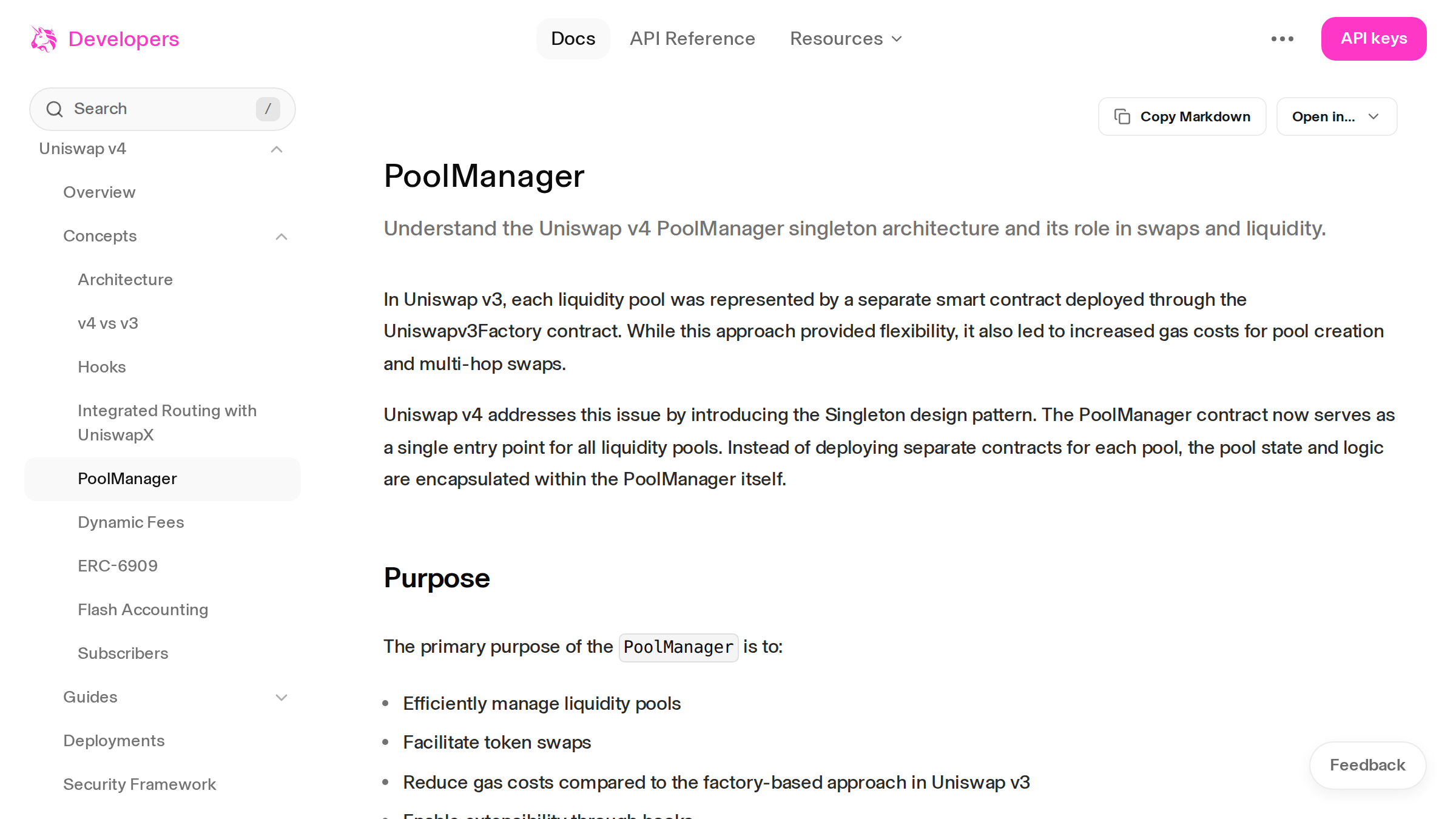
Use a field-by-field matrix rather than a single “allocation verified” checkbox. Include the claim, evidence URL or address, observed value, check time, owner and status. Mark a field “not applicable” only with a reason. A missing source is unknown, not zero. A disagreement between the interface and the contract is a launch issue to resolve, not a copywriting detail.
Trace liquidity and contract dependencies
Describe the liquidity path in operational terms. Which pool or venue is created? Which assets and parameters are used? Who supplies initial liquidity? Who can change fees or parameters? What transaction must succeed before users can trade? These answers vary by protocol and deployment. Use the relevant protocol's official documentation and the actual addresses or configuration for the launch you are reviewing.
Uniswap v4 documentation describes a singleton `PoolManager` that manages pool state and operations, with hooks that can extend behavior. That architecture is specific to Uniswap v4. It does not establish the requirements of another DEX, a bridge, a launchpad or a custom market. For a v4 integration, review the deployed PoolManager, pool key, hooks, fee settings and the integration path. The protocol overview points developers to concepts, guides, repositories, audits and deployment references. Use those sources to trace the implementation rather than generalizing from the overview.
Run the full operational sequence in a controlled environment. Confirm that the pool or distribution is initialized as expected, that roles and balances match the approved plan, and that monitoring is active. Document rollback or pause criteria and the person authorized to use them. Do not imply that liquidity depth ensures a stable price or a successful launch.
Use a readiness matrix and keep uncertainty visible
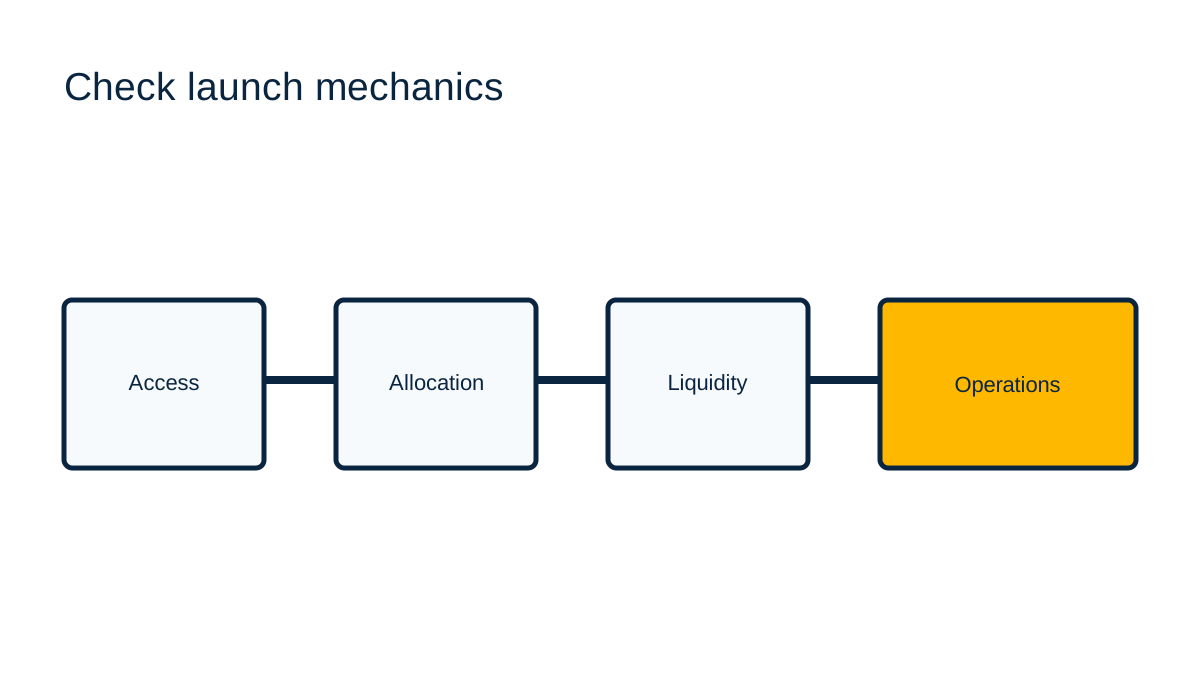
Before opening distribution, review four evidence areas: participant access, allocation, liquidity and operations. For each, record the requirement, primary source, current result, accountable owner and unresolved question. The matrix is a decision aid. It does not turn uncertain evidence into a score or guarantee an outcome.
A useful readiness review asks whether a new participant can follow the stated path, whether the allocation terms match the implementation, whether the liquidity sequence has a named operator, and whether monitoring and incident controls are active. If any answer is unknown, decide whether the launch can proceed with that uncertainty, whether the disclosure must change, or whether the dependency must be resolved first. Put the decision and its approver in the record.
Common failures include using a generic launch checklist for a protocol-specific mechanism, relying on an outdated deployment address, overlooking privileged configuration, and treating a successful test transaction as proof that all users can participate. Keep the evidence links with the checklist and rerun the tests after any contract, interface, eligibility or liquidity change. For broader comparisons of launch models, see my [DeFi launch frameworks](DeFi launch frameworks) guide and [DeFi GTM checklist](DeFi GTM checklist).
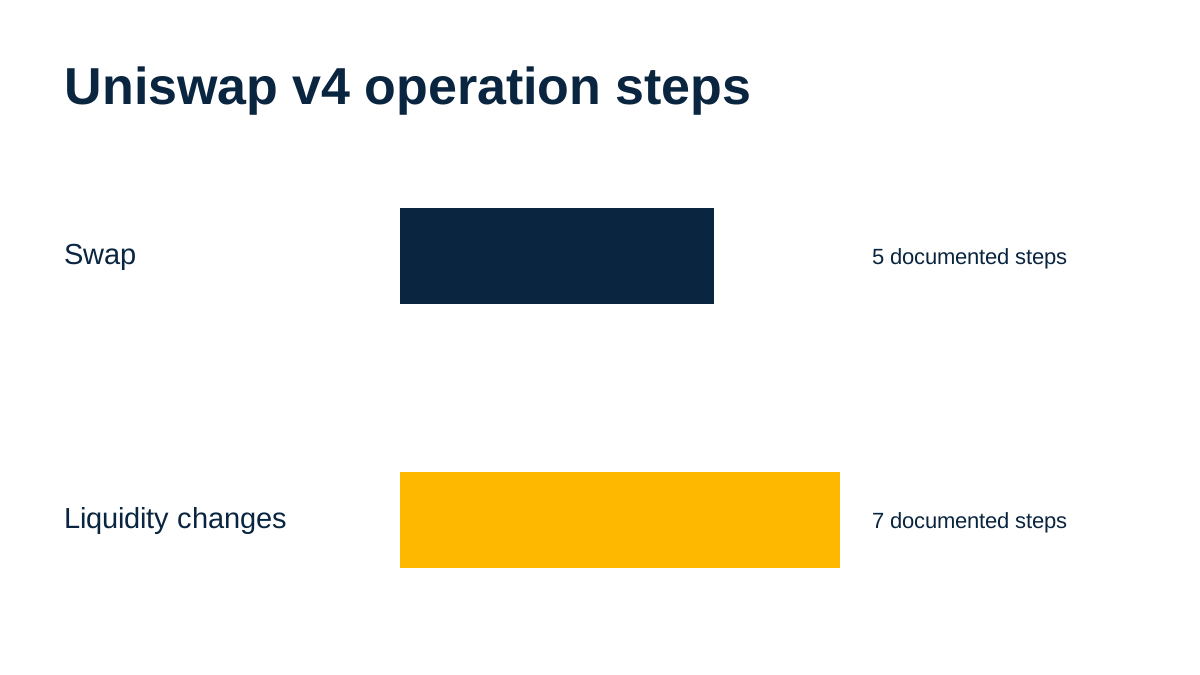
The chart counts the step lists on the Uniswap v4 PoolManager page: five for a swap and seven for liquidity modification. The counts are useful only as a reminder that an operation has multiple checks and hooks. They do not describe every deployed hook, integration or DeFi launch. For another protocol, rebuild this evidence list from its own documentation and deployed configuration.
Evidence record
| Evidence area | Record | Decision rule |
|---|---|---|
| Source | Official page, address or configuration | Keep the URL and check date |
| Observed behavior | Response, state, function or event | Separate observation from disclosure |
| Uncertainty | Unknown or partial field | Do not fill gaps by inference |
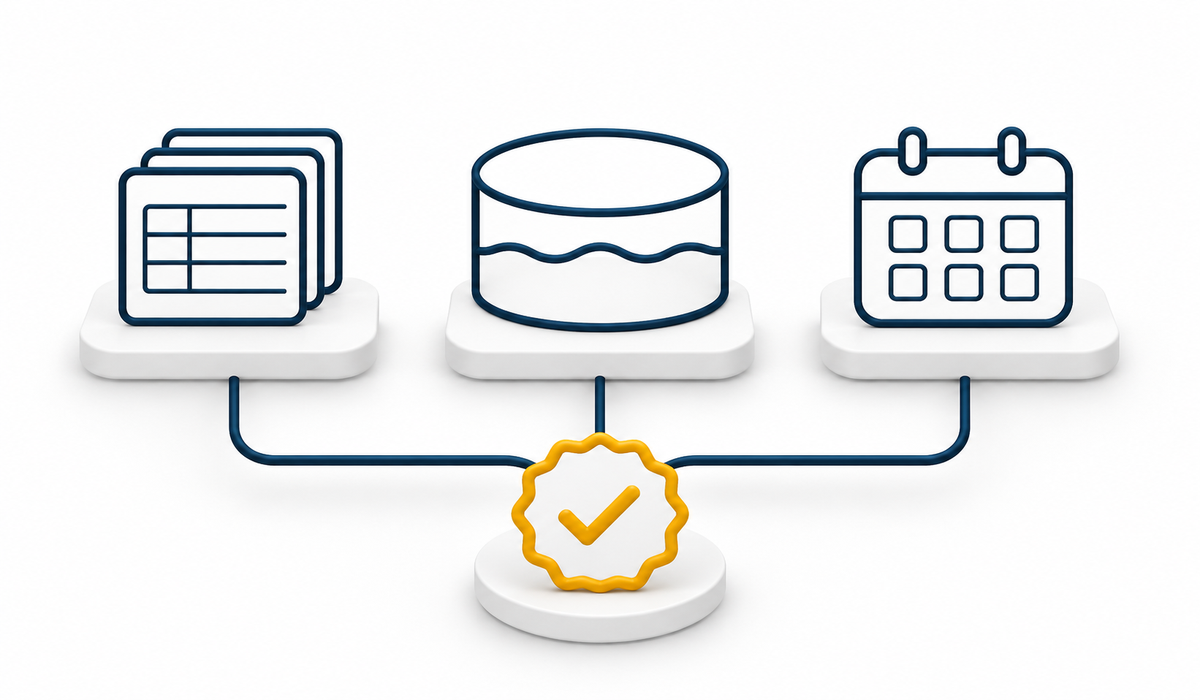
| Owner | Person responsible for resolution | Recheck after any material change |
Frequently Asked Questions
Does a liquidity pool guarantee a successful token launch?
No. A pool is one market mechanism. It does not guarantee demand, fair access, adequate liquidity or a stable price.
What should be checked before token distribution opens?
Verify participant access, allocation rules, liquidity operations, contract configuration, monitoring and accountable owners. Use primary sources and mark unresolved fields unknown.
Can a Uniswap v4 checklist be used for every DeFi launch?
No. Uniswap v4 documentation describes its own architecture. Other protocols and deployments have different contracts and operating requirements.
What if the interface and contract show different allocation terms?
Pause the readiness decision and resolve the discrepancy with the responsible owner. Record the exact evidence and update the participant-facing terms before relying on either version.
References
- https://docs.uniswap.org/contracts/v4/concepts/PoolManager, accessed 2026-11-09.
- https://docs.uniswap.org/contracts/v4/overview, accessed 2026-11-09.
Make the next decision from evidence.
I review Web3 growth systems across product, distribution and measurement.
Explore the Web3 Growth Audit